
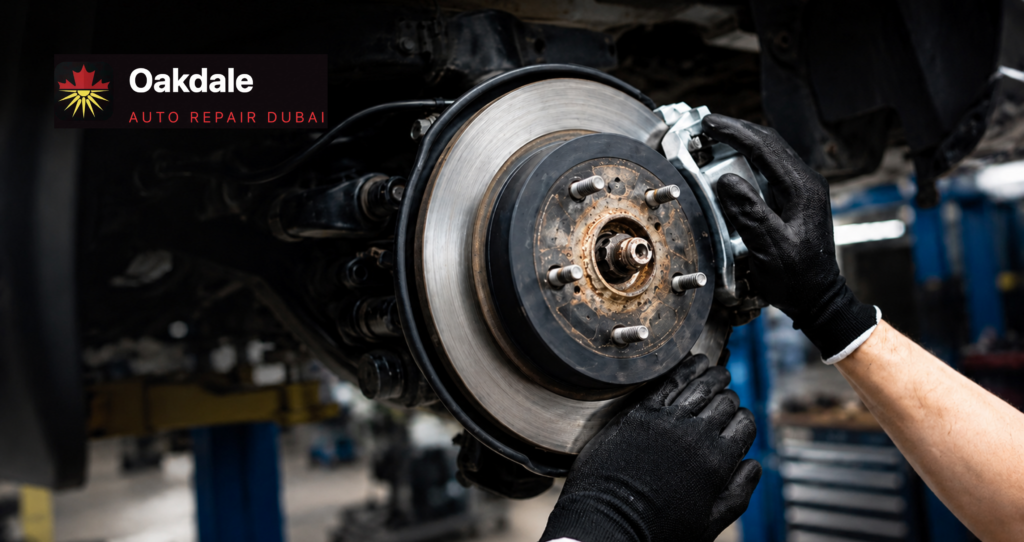
Pressing the brake pedal feels like one simple action, but several parts have to work together to slow the vehicle safely.
Modern brake systems combine hydraulic pressure with mechanical friction. Brake fluid transfers force through the system, calipers apply pressure, brake pads create friction, and discs provide the surface the pads clamp against.
This matters because a squeak does not automatically mean worn pads, vibration does not always mean damaged discs, and a soft pedal can point towards an entirely different part of the braking system.
Understanding what each component does makes it easier to recognise when your brakes need professional attention rather than guessing which part should be replaced.
Think of the Brake System as a Four-Part Chain
A useful way to understand your brakes is to follow what happens after you press the pedal.
Step 1: Brake fluid transfers pressure.
Your pedal input creates hydraulic pressure within the braking system.
Step 2: The calipers respond.
That hydraulic pressure causes the calipers to apply the brake pads.
Step 3: The pads grip the discs.
The pads press against the rotating brake discs.
Step 4: Friction slows the wheels.
The resulting friction reduces wheel speed and slows the vehicle.
If one part of this process is not working correctly, braking behaviour can change.
Brakes Feel Different Than They Did Last Week?
Oakdale Auto Repair can inspect the complete braking system rather than assuming the problem is only the pads.
Call or WhatsApp +971 55 599 1234
Visit 29th St, Al Quoz Industrial Area 4, Dubai
Website: https://oakdaleautodubai.com/
Brake Pads: The Parts Designed to Wear
Brake pads contain friction material that presses against the brake discs whenever you slow down.
Because they create friction repeatedly, pads gradually wear and eventually require replacement.
Possible signs that deserve inspection include:
- Persistent squealing
- Grinding
- Changes in braking feel
- A brake-pad warning on equipped vehicles
But noise does not automatically prove the pads have reached their wear limit.
Squeaking can also result from contamination, dust, glazing or disc condition. Grinding may indicate severe pad wear, but another mechanical issue can sometimes create similar sounds.
Oakdale’s guide to brake pad replacement in Dubai explains why brake noise should be diagnosed before replacement is recommended.
Brake Discs: More Than a Smooth Metal Surface
Brake discs, also called rotors, rotate with the wheels.
When the brake pads clamp onto them, friction converts vehicle movement into heat. That heat has to be managed repeatedly every time you slow down.
Discs can develop:
- Wear
- Surface scoring
- Heat-related damage
- Uneven braking surfaces
If you feel vibration while braking, disc condition may be one area to investigate.
However, vibration can also involve tyres, suspension or other rotating components. Replacing discs based on pedal vibration alone can therefore miss the real cause.
Squealing, Grinding or Vibrating Under Braking?
Oakdale Auto Repair can inspect the pads, discs and related components and explain which part is genuinely responsible.
Call or WhatsApp +971 55 599 1234 or bring the vehicle to 29th St, Al Quoz Industrial Area 4, Dubai.
Brake Calipers: The Clamping Force Behind the Pads
The caliper sits around the brake disc and uses hydraulic pressure to push the pads against it.
A caliper problem can affect how evenly braking force is applied.
Possible clues can include:
- Pulling during braking
- Uneven brake-pad wear
- Excessive heat around one wheel
- A change in braking performance
A sticking caliper, for example, can sometimes leave one brake partially applied or prevent a pad from working as intended.
But a vehicle pulling to one side is not automatically suffering from a caliper fault. Tyres, wheel alignment and suspension can create similar behaviour.
That is why the braking system and related chassis components sometimes need to be considered together.
Oakdale’s guide to suspension warning signs explains why pulling, tyre wear and handling changes can overlap with brake complaints.
Brake Fluid: The Part You Rarely Think About
Brake fluid works quietly in the background.
When you press the pedal, hydraulic pressure travels through the fluid to the braking components at the wheels.
If something affects that hydraulic pressure, the pedal can feel different.
A low brake-fluid level may be associated with pad wear, leakage or another braking-system concern depending on the vehicle. If the fluid keeps dropping, repeatedly topping it up is not a proper solution.
Brake-fluid condition also changes over time, but replacement requirements vary by vehicle. Manufacturer guidance should determine servicing rather than one universal mileage or time interval.
Soft, Hard or Vibrating Pedal? The Difference Matters
Pedal feel can provide useful clues.
Soft or spongy pedal
This may be associated with hydraulic pressure problems, air within the system, fluid concerns or another fault.
Hard pedal
If significantly more force is suddenly required to stop the vehicle, brake assistance or another system may need attention.
Pulsing or vibrating pedal
A pulsing sensation can be normal when ABS activates during emergency braking. Vibration during normal braking is different and may involve discs or another component.
Pedal suddenly travels farther
A noticeable increase in pedal travel deserves inspection, particularly if braking performance has also changed.
None of these symptoms should be used to diagnose one part from the driver’s seat.
Why Brake Parts Should Be Inspected Together
Brake pads, discs, calipers and hydraulic components interact.
For example:
A worn pad may damage a disc if it is used too long.
A sticking caliper may create abnormal pad wear.
A damaged disc may affect how a new pad contacts the braking surface.
A hydraulic problem may change pedal feel even when the pads still have plenty of friction material.
This is why replacing only the most obvious component can sometimes leave the underlying problem unresolved.
A broader car inspection in Dubai can also help when brake symptoms appear alongside tyre, steering or other vehicle concerns.
Not Sure Which Brake Part Is Causing the Problem?
Oakdale Auto Repair takes a diagnosis-first approach to braking concerns, checking how the system works together before recommending repairs.
Call or WhatsApp +971 55 599 1234
Workshop: 29th St, Al Quoz Industrial Area 4, Dubai
How Dubai Driving Can Influence Brake Wear
Dubai traffic often involves repeated stop-and-go driving, especially during busy commuting periods.
Frequent braking can influence how quickly pads and discs wear, but there is no responsible universal replacement mileage for every vehicle.
Brake wear also depends on:
- Vehicle weight
- Driving style
- Brake design
- Component quality
- Road use
- Maintenance condition
That makes inspection more useful than relying only on the odometer.
A heavy SUV used mainly in urban traffic can experience very different brake wear from a lighter vehicle driven mostly on open roads.
FAQs
What are the main components of car brake systems?
Key components include brake pads, brake discs, calipers and brake fluid, along with hydraulic lines and other control components. They work together to convert pedal pressure into braking force at the wheels.
Do brake pads and discs need replacing together?
Not automatically. Brake discs should be inspected and measured to determine whether they remain suitable for use. Serviceable discs may remain while worn or damaged discs may require further attention.
What does a brake caliper do?
The caliper uses hydraulic pressure to press the brake pads against the disc. Problems with caliper operation can contribute to uneven braking, abnormal pad wear or pulling.
Why does my brake pedal feel soft?
A soft pedal may indicate a hydraulic or brake-fluid-related issue, air within the system or another fault. It should be checked, especially if braking performance has changed.
Can Dubai traffic wear brake pads faster?
Frequent stop-and-go driving increases how often the brakes are applied and can influence wear. Vehicle weight, brake design and driving style also affect how quickly components wear.
Where can I get my brake system checked in Dubai?
Oakdale Auto Repair in Al Quoz Industrial Area 4 can inspect brake pads, discs, calipers and hydraulic braking components across multiple vehicle makes, including European and luxury vehicles.
Good Braking Depends on the Whole System
Brake pads may be the component drivers hear about most often, but safe and predictable braking depends on the whole system working correctly.
A squeak, grinding noise, vibration or different pedal feel should therefore lead to inspection rather than an automatic parts order.
The objective is to find which part of the braking chain has changed and correct the actual problem.
Brakes No Longer Feel Predictable? Get the Complete System Checked
Oakdale Auto Repair combines practical brake inspection with a diagnosis-first approach, helping identify whether the issue involves pads, discs, calipers, hydraulic components or another related system. The 3rd-generation Canadian-owned family workshop brings more than 30 years of automotive experience across multiple vehicle makes.
Call or WhatsApp +971 55 599 1234
Visit 29th St, Al Quoz Industrial Area 4, Dubai
Instagram: @oakdaleautorepair